Recycling balers are used to recycle
your waste materials by compressing them into tight bales. Vertical baler or
horizontal baler? Manual baler or automatic baler, you decide! View more details at http://www.sinobaler.com/recycling-baler-machine/.
Showing posts with label recycling baler. Show all posts
Showing posts with label recycling baler. Show all posts
Tuesday, July 11, 2017


Tuesday, August 5, 2014
Cotton Waste Reuse

Cotton is a natural cellulose fiber, which is one of the oldest and most used natural fibers applied in various fields in the world today. It is a main composition of paper and textiles.
In the first modern industrial, cotton articles are used to make paper. Later, people also make paper by recycling old paper and using wood pulp. However, paper made from wood pulp is lower quality than made from cotton. Cotton paper is much more durable and long lasting than wood pulp paper. Cotton can also be easily recycled together with old paper, into new paper.
Waste cotton can be made into high quality fabric and yarn. The cellulose fibers in cotton are long, thus cotton textile is quite durable. Some cotton waste recycling facilities work in this way: Firstly the manufacturers source raw waste worldwide and meanwhile control the material quality. Secondly these cotton waste is carded in multiple steps into very fine forms, and eventually the cotton waste becomes a wad-like substance which is suitable for spinning yarn. At the beginning of the spinning process, the recycled waste cotton is ground and then transported to the spinning machines. Thereafter, the waste will be produced into finer yarn by the spinning machines until a desired consistency and weight is reached. Eventually, the yarn is stabilized by several processes that imbues the yarn with required quality. The finally recycled yarn can be used for knitting or weaving into a variety type of fabric.
During the process of transporting waste cotton, many manufacturers use hydraulic baling machines to compress the waste cottons and make into neat and dense square bales so that their transportation cost, loading and unloading cost, storage cost will be greatly saved. SINOBALER lifting chamber baler is a good choice for making your large volume loose waste cottons into high dense square bales.If you are interested in baling cotton waste, please check our video of lifting chamber baler at https://www.youtube.com/watch?v=3uIMwJuNgt0 or twin chamber baler at https://www.youtube.com/watch?v=yF9eN9gp5Hw for more detail information.
Other waste material recycling articles:
Wednesday, June 25, 2014
Things to keep in mind on how to choose a right baler

When going through the process of choosing the right baler for your business, here are a few pointers:
Safety First
It is important to consider baler safety features when you choose the right baler for your application. Ask the following questions to your baler manufacturer firstly:
Does the manufacturer provide additional warranty or guarantee production values?
Is training service provided for operators and maintenance personnel after installation?
Is the machine with clear safety warning marks?
Are all the rotation parts protected with safety equipments?
Will the machine be shipped via seaworthy package for safety transportation?
Be sure that the manufacturer provides you the baler which is simple and safe to operate.
Weather conditions
Where will you run the baler? Inside the warehouse or in the open air where is without any protection to keep away from rainwater? If it is the former, you still need to consider the affect will be caused by the maximum temperature during summer. The hydraulic system is especially sensitive to the high temperature. So you should always keep in mind that the high quality cooling system is extremely important to keep baler running at peak performance under hot weather.
While if you run the baler outdoors without any cover, make sure the components are with higher IP grade, especially the important hydraulic and electrical parts, such as the motor, pump, field terminal assembly, etc.
Energy consumption
Environmental protection and energy conservation are the theme of the world today. The baler now is playing an important role in waste recycling area. It takes its responsibility for the global environmental protection like all other recycling equipments. At the same time, energy consumption issue is also getting more and more attention. So when you choose a baler, don’t forget to find out the optimal power you want your baler to be.
Space
When you choose a baler, you need to know how much space you can provide for it. Usually, vertical balers are good choice to run in supermarkets, grocery stores, department stores, pharmacies, small factories, vessels, offices, etc. While for the big recycling plants, distribution centers, etc, horizontal balers are more suitable for pressing large volume waste.
Investment and Return on Investment
The most important and ultimate aim to use the machine instead of human today is to improve work capacity and get max return on investment. Saving labor cost means you get disguised return on investment directly. While maximizing throughput speeds up the process to get return on investment. When you decide to recycle large volume waste, a fully automatic horizontal baler is an ideal choice for you to get return on investment in a shorter time than vertical type, it does great job in both saving labor cost and maximize the throughput rate. Its fully automatic tying system, PLC control, automatic material feeding system, etc, all of these make it outstanding among all baler types. While for small factories and departments, etc where they need to handle the daily waste, vertical balers are more worth of investment to your business.
Baled Material's Characteristics
The characteristics of the materials to be baled also plays an important role in determining the size and type of baler to purchase, such as expansion rate, retention rate, hollowness, density, dissipation, etc. Choosing a particular baler model, such as cardboard baler versus bottle baler, is largely based on the specific material that will be received and how it will be most efficiently processed.
While a cardboard baler lends itself better to baling paper products such as OCC, carton waste or printer’s waste, bottle baler works best on products such as plastic bottles or aluminum containers which with odd shapes, low compressibility or high memory retention.
Maintenance
A low maintenance cost is critical to selecting the latest baler in their processing operation. Low maintenance means no specialized or customized parts. A baler with standardized hydraulic and electrical components makes you find the local replacements conveniently. You can go into any hydraulic shop or electrical supply house and get parts for it when you do not want to call the manufacturer and have the replacements delivered by air next day.
If you have any questions or comments while choosing right baler, please remember SinoBaler is always ready for assistance.
Monday, January 13, 2014
How to deal with Used Drums or Barrels?

It is common to see steel drums or steel
barrels around us in life. Such
cylindrical containers are generally used for transportation and storage of
liquids and powders. Many drums have a
common nominal volume of 208 litres (55 US gallon), measuring just under 880mm
(35”) tall with a diameter just under 610mm (24”).
Regardless the drums were used to contain
dangerous chemical or other harmless liquids or powders, storing the drums after
their purpose has been served will always be a problem because empty drums tend
to become massive containers that take up a lot of space. For temporarily storage, you can simply just
stack it up; but after a while, you will surely run out of space for these
drums.
So how will you handle the disposal of
drums? Used drums are not like any day-to-day end of used products which can be
easily thrown away. Such large drums are
usually handled differently due to its size, as well as the residual material
left over in the container which may be considered hazardous. A waste may be considered hazardous if it is
ignitable (i.e. burns readily), corrosive, reactive (e.g. explosive), or
extraction procedure (EP) toxic. Waste
may also be considered hazardous if it contains certain amounts of particular
chemicals.
A good solution for handling such kind of used
drums is to use a Drum Crusher (also known as barrel flattener, drum press, or
drum crushing balers) to flatten the drums as thin as three inches high. This crushing baler can flatten almost any
kind of metal containers, drums, or barrels, up to a full 220 litres (58 US
gallon) size. This baling machine is
also equipped with Liquid Drainage Channel, which will efficiently drained the residual
liquid in the drums out of the baler to keep your recycling area clean and
safe.
One drum crusher can compact on average 60
pieces of drums per hour, and only require just 1 person to operate. So with a volume reduction of almost 85%, and
residual material drained, the flattened drums can now easily stockpile on
pallets and move to a steel mill for recycling as per your country’s
regulations.
Maybe you will feel purchasing a Drum Crusher is slightly costly during your initial budget planning. But your return on investment is ensured if
you choose a good quality machine, the drum crusher will be able to help you to
maximize your storage capacity, as well as reduce your transportation cost. Therefore, all these savings will be able to make
your investment worth its while in no time.
Wednesday, December 4, 2013
Everyone Should Be Conscious About Recycling
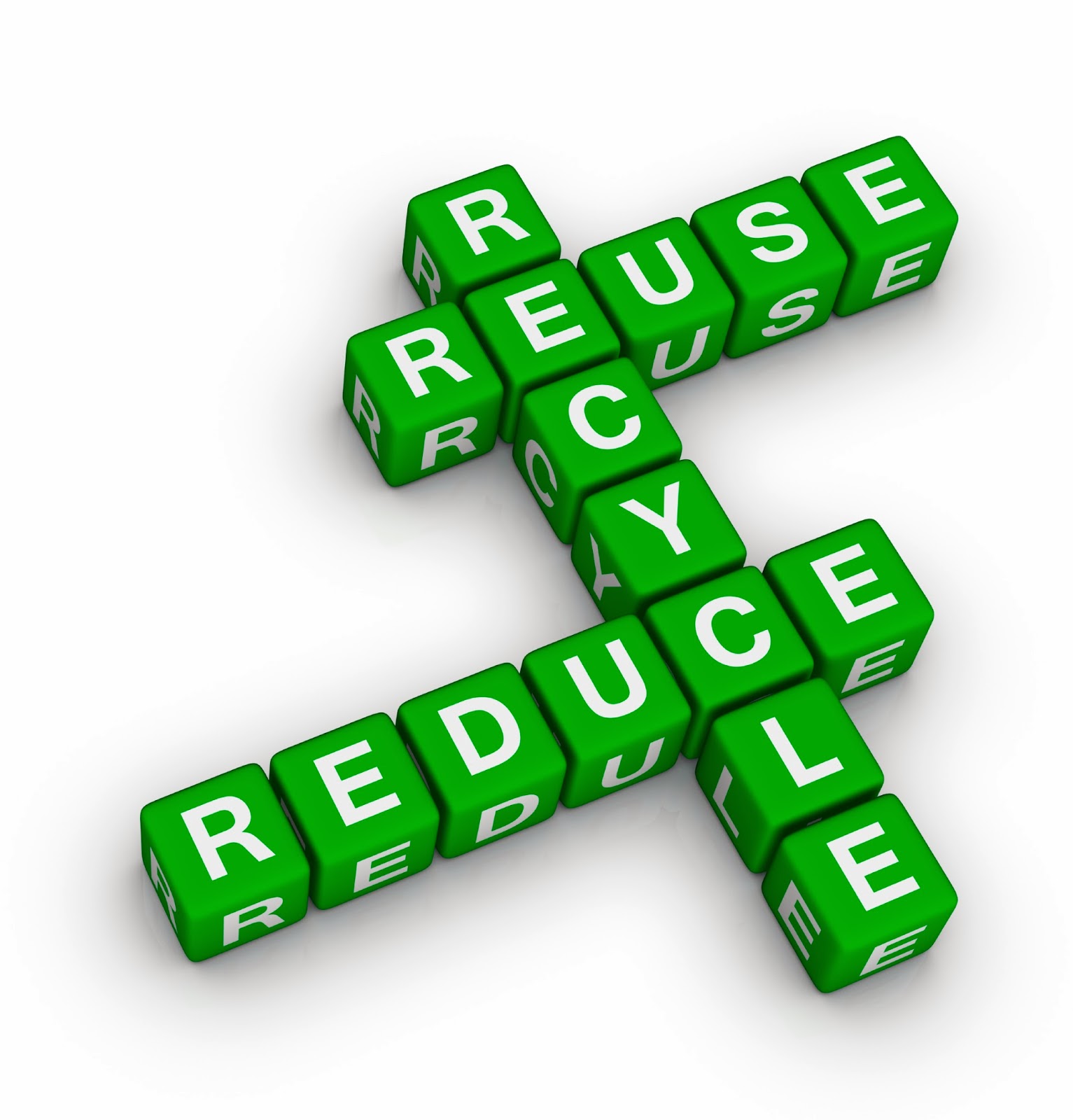
Recycling is a pretty simple concept - i.e. take a useless object and turned it into something useful instead of throwing it away. Generally, when you found a new way to re-use something old, you are recycling. But on a larger scale, used consumer products that are recyclable, are typically collected by recycling companies or organizations to process it into raw materials, and then further remade into new products.
Sending
waste to landfills and incinerators are the conventional ways of disposing your
unwanted waste material. However, landfills not only take up huge area of
space, it also causes contamination and pollution to the soil and water.
Incinerators, on the other side, contribute to air pollution and global
climate change with its greenhouse gas emission. In order to prevent
these harmful pollutions to escalate further, recycling plays an important
role. On top of that, recycling also helps to conserve natural resources.
Instead
of making brand new product from pure raw materials, making use of recycled
materials can be more environmental friendly and sometimes more cost effective.
For example: Aluminum (found mainly as bauxite) is the third most
abundant element in Earth's crust (which is after oxygen and silicon), but
extracting this metal from bauxite is highly energy intensive. It takes
four tons of bauxite to just produce one ton of aluminum. Compared to aluminum
recycling, it will only use a fraction of such energy. On average, the
aluminum beverage cans get recycled within 60 days; in another words, a can of
soda is back on the supermarket shelves sixty days after you have disposed it
into the recycle bin.
For a
recycling company to effectively collect back the recyclable waste, the baling machine is an essential equipment to have.
A baler compresses bulky, loose waste materials into dense,
regularly-shaped bales. With its reduced volume, more waste materials can be
transported on a single trip by truck, trailer or containers for further
recycling purposes, thus saving greatly on cost and energy involved in
transportation. With the growing importance and popularity of baler
machines, as well as the unique properties of different material types, much
effort has been devoted to developing the baling presses for specific material,
so as to achieve optimal baling results. There are
typically three main types of baling equipment - Manual
Balers, Semi-auto
Balers and Automatic
Balers. The best way to find the right baling press for your need is
to contact a specialized
baler manufacturer.
As you can see, apart from environmental benefits, recycling can also helps creating more job opportunities. Economic analysis shows that recycling can generate three times more revenue per ton as landfill disposal and almost six times as many jobs! Therefore, everyone should be conscious about recycling, and make an effort to do it anytime and anywhere.
Thursday, March 31, 2011
Protecting The Earth One Baler At A Time
Recycling has become one of the most important acts of this day and age. People are making a more conscious effort to recycle and reuse their products, and it is making all the difference. If we want to keep this earth healthy and intact, it is up to us to do everything we can to make it happen. When we, as a society, talk about recycling, we tend to think that it is just something being done around the United States in our local neighborhoods. However, people outside of the United States are also going above and beyond to make sure that recycling is a priority.
Recycling doesn't always mean making sure that the cans and bottles go in the recycling bin ' recycling clothes, cardboard, coconut fiber and steel/aluminum items are also a few things that companies and people all over the world are making a point to recycle. One of the best ways to go about recycling these types of products is with a baler. Balers are machines that compress and pack a certain item for waste recycling. This is a very helpful tool because it automatically packs together all of the similar items you want to recycle.
There are two types of balers ' vertical balers and horizontal balers. Vertical balers are loaded from the front and compress from the top, down. They are also typically manually operated and are best suited for textile manufacturers, grocery stores or any person that recycles material such as clothing, cardboard, coconut fiber, plastic bottles, fabric scraps and wood shavings. These vertical balers can compress anywhere from 5 tons to 250 tons. On the other hand, horizontal balers are loaded from the top by a conveying belt or forklift and compress material from the sides. Unlike vertical balers, horizontal balers are fully automatic and are perfect for larger quantities of recyclables and ideal for bulky waste. They compress a lot more than vertical balers do, as their force can be anywhere from 20 tons to hundreds of tons.
There are many people all over the world who are doing everything they can to keep the recycling process going. Purchasing a baler can significantly help out with your recycling needs, so get one today and be on your way to a more organized and healthy world!
Recycling doesn't always mean making sure that the cans and bottles go in the recycling bin ' recycling clothes, cardboard, coconut fiber and steel/aluminum items are also a few things that companies and people all over the world are making a point to recycle. One of the best ways to go about recycling these types of products is with a baler. Balers are machines that compress and pack a certain item for waste recycling. This is a very helpful tool because it automatically packs together all of the similar items you want to recycle.
There are two types of balers ' vertical balers and horizontal balers. Vertical balers are loaded from the front and compress from the top, down. They are also typically manually operated and are best suited for textile manufacturers, grocery stores or any person that recycles material such as clothing, cardboard, coconut fiber, plastic bottles, fabric scraps and wood shavings. These vertical balers can compress anywhere from 5 tons to 250 tons. On the other hand, horizontal balers are loaded from the top by a conveying belt or forklift and compress material from the sides. Unlike vertical balers, horizontal balers are fully automatic and are perfect for larger quantities of recyclables and ideal for bulky waste. They compress a lot more than vertical balers do, as their force can be anywhere from 20 tons to hundreds of tons.
There are many people all over the world who are doing everything they can to keep the recycling process going. Purchasing a baler can significantly help out with your recycling needs, so get one today and be on your way to a more organized and healthy world!
Subscribe to:
Posts (Atom)